How much does a concrete driveway cost in Wall Township, NJ?+
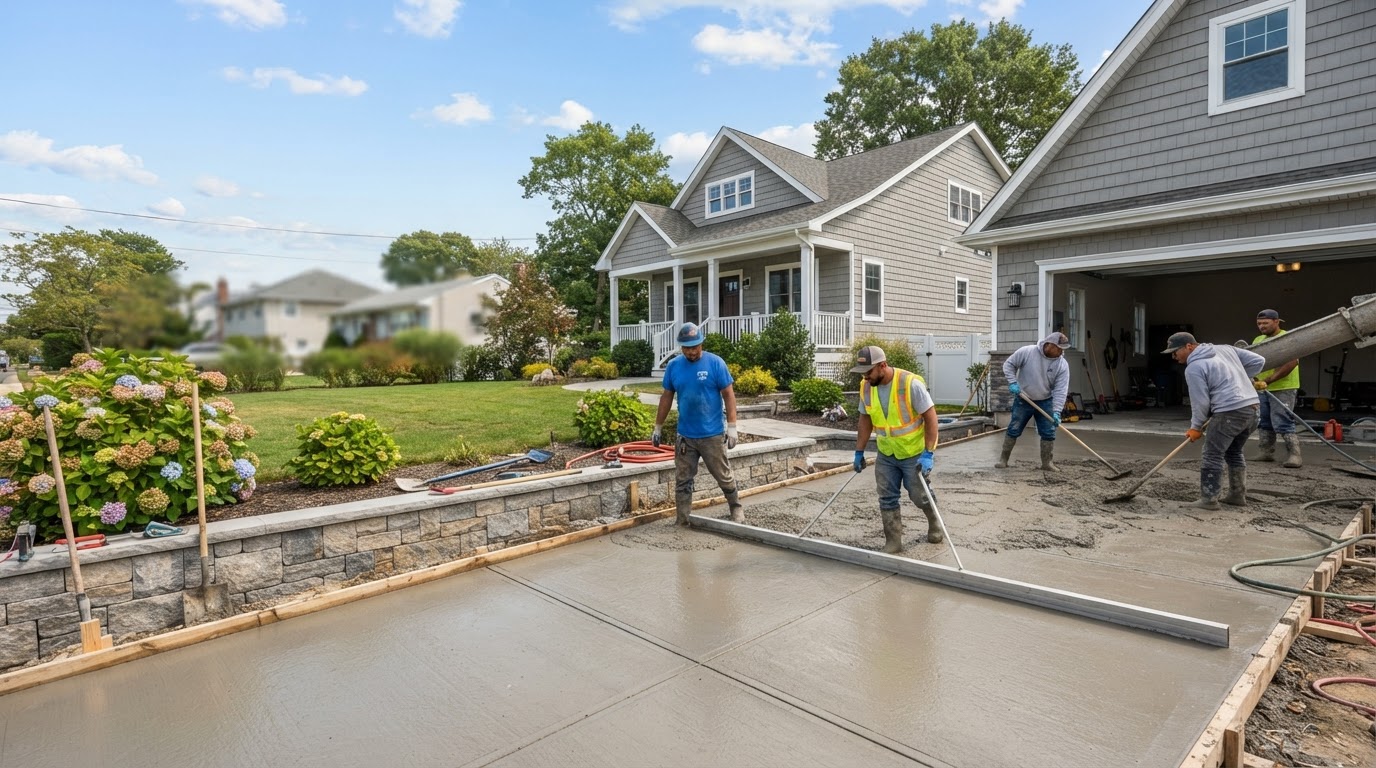
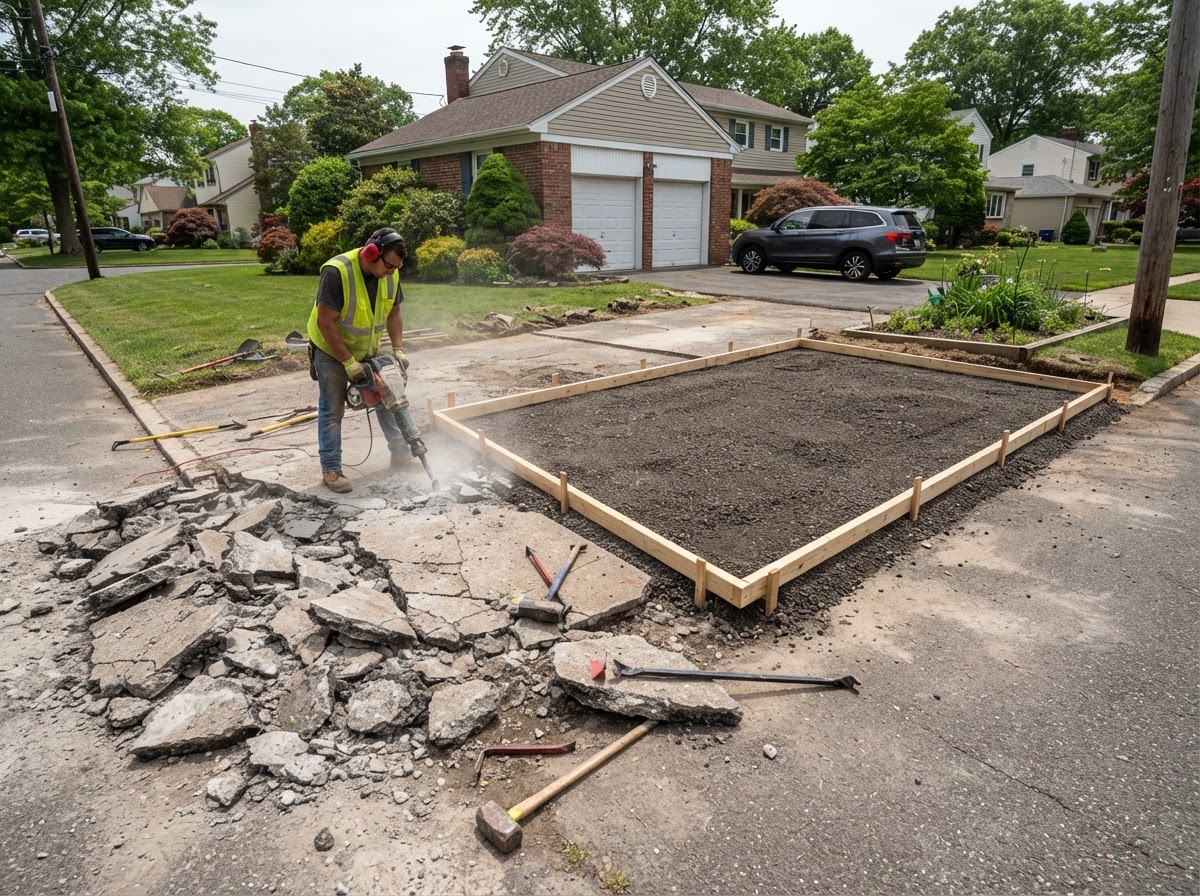
A concrete driveway in Wall Township typically runs $8–$15+ per square foot for installation or replacement. Demolition, disposal, grading, base correction, drainage, driveway size and finish choice are the main variables. An on-site estimate gives the actual number for your property.
Is concrete or asphalt better for a driveway in New Jersey?+
Concrete generally lasts longer and holds up better to New Jersey freeze/thaw exposure and deicing salts when properly placed and cured. Asphalt is softer in summer heat and may require more frequent resurfacing. The right choice depends on budget, aesthetics and how the driveway is used.
Can an old cracked concrete driveway be repaired instead of replaced?+
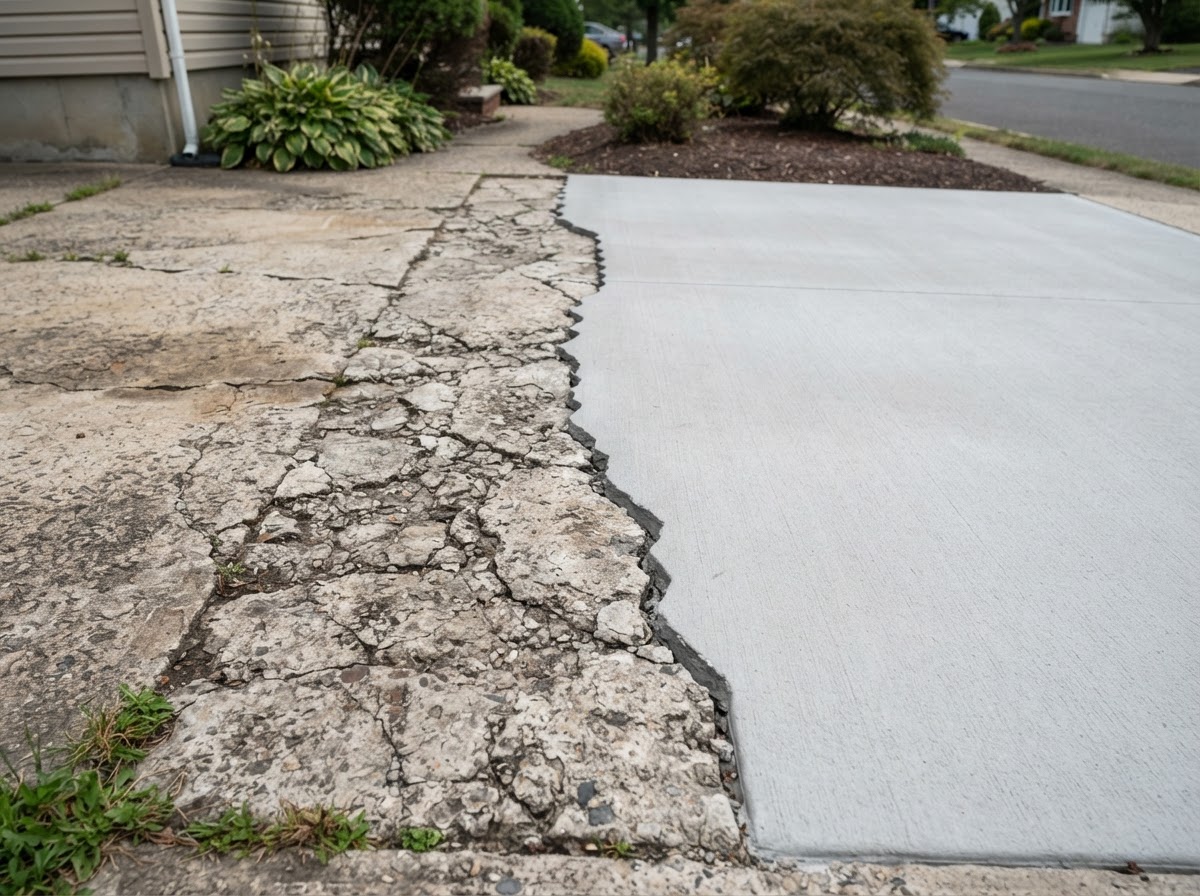
An old cracked driveway can often be repaired when the cracks are isolated and the base is still stable. Replacement becomes more likely with widespread cracking, differential settlement or base failure. We evaluate the movement and base before recommending repair or full replacement.
What causes concrete driveways to sink or become uneven?+
Concrete driveways sink or become uneven when the base or subgrade beneath them moves, settles or was not adequately compacted. Water erosion, poor drainage and freeze/thaw cycling accelerate the problem. Correcting the base and drainage is what prevents recurrence.
How do you prevent water from pooling on a new concrete driveway or patio?+
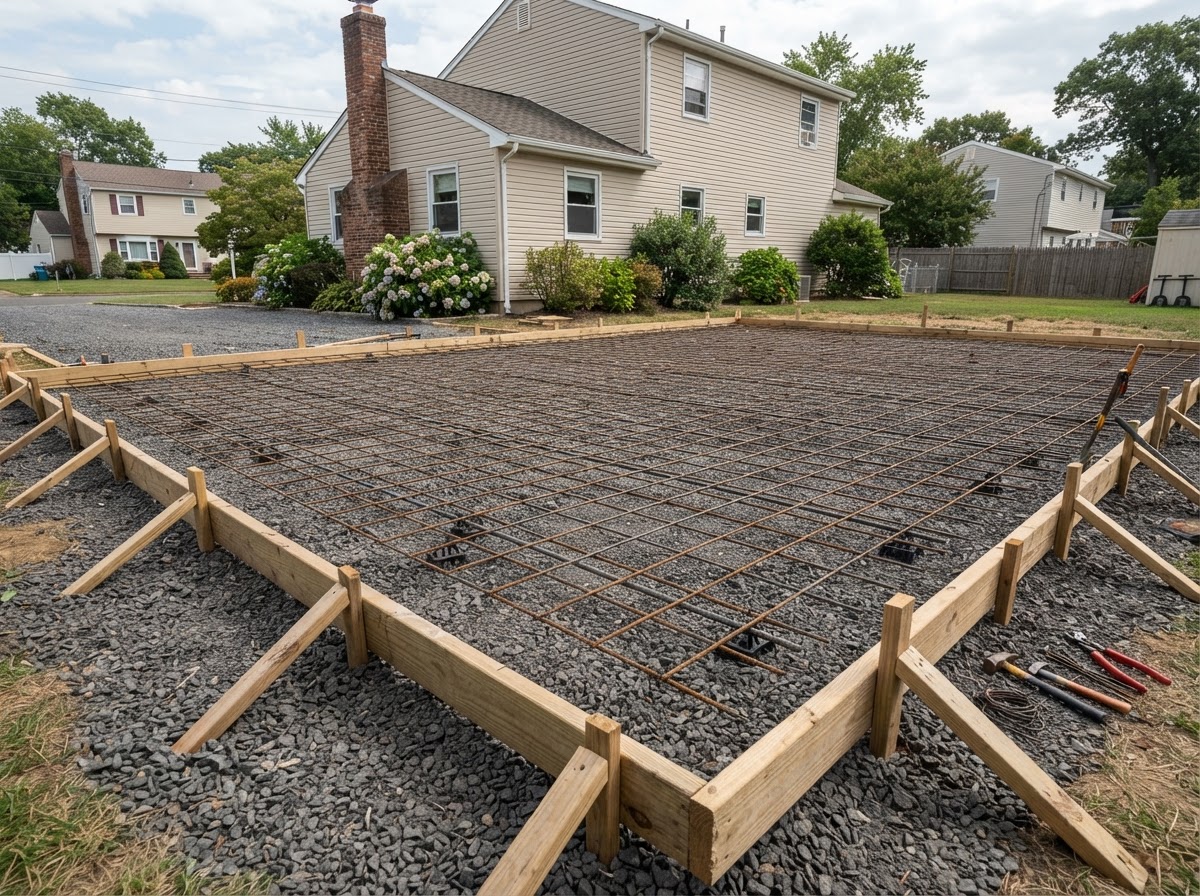
Pooling is prevented through proper grading and positive drainage — pitching the surface so water flows away from structures and off the slab. Subgrade preparation, compacted aggregate base and planned elevations all contribute. Drainage is designed in before the pour, not added after.
Does Wall Township require approval for a new driveway or patio?+
Wall Township may require zoning review for new driveways, patios and walkways, and additional approvals may apply depending on scope. The Wall Township Land Use Office handles residential zoning review for exterior improvements. Confirm what applies to your project before starting.
How long does a new concrete driveway need before normal use?+
A new concrete driveway needs time to gain strength before normal vehicle use, and that timing depends on the mix, weather and slab conditions rather than a fixed number. Project-specific cure and use instructions are provided at the final walkthrough. Foot traffic is usually possible sooner than vehicle traffic.
What is the difference between broom-finished and stamped concrete?+
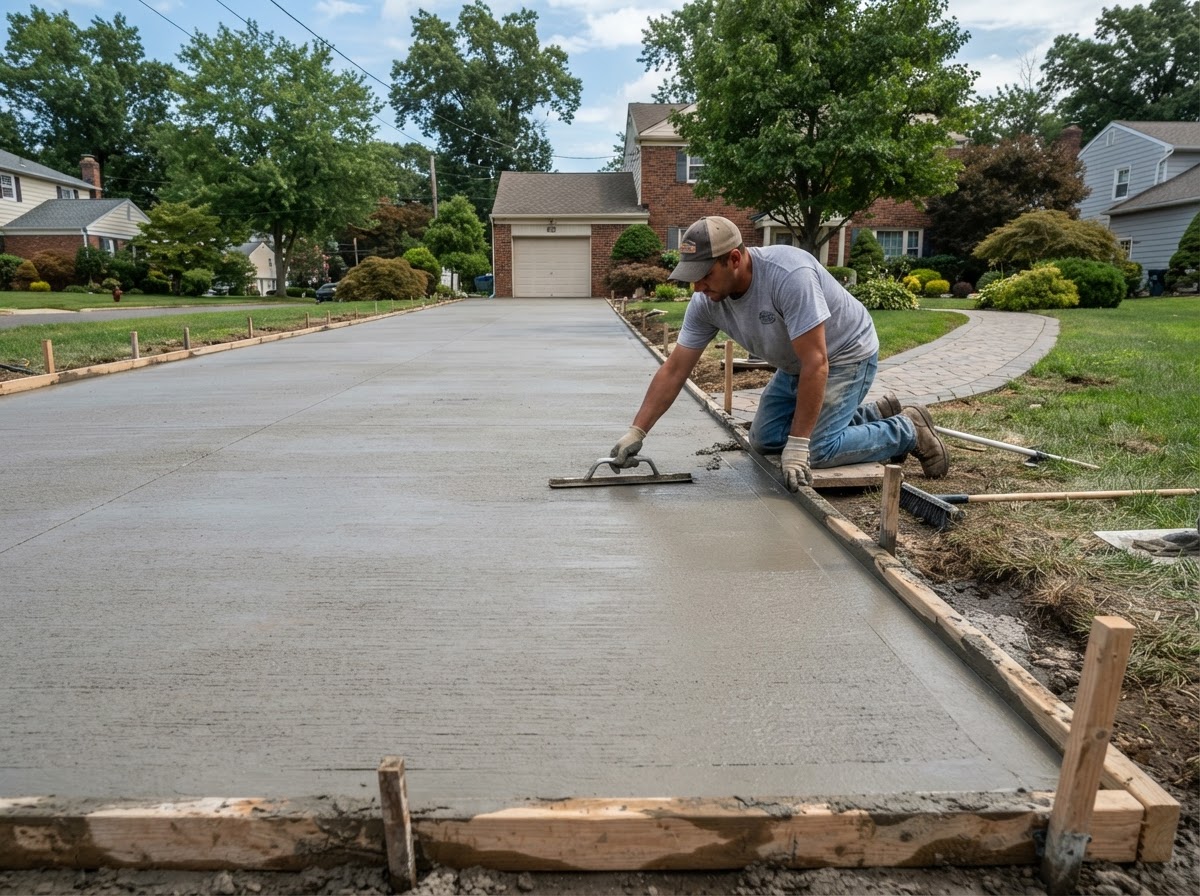
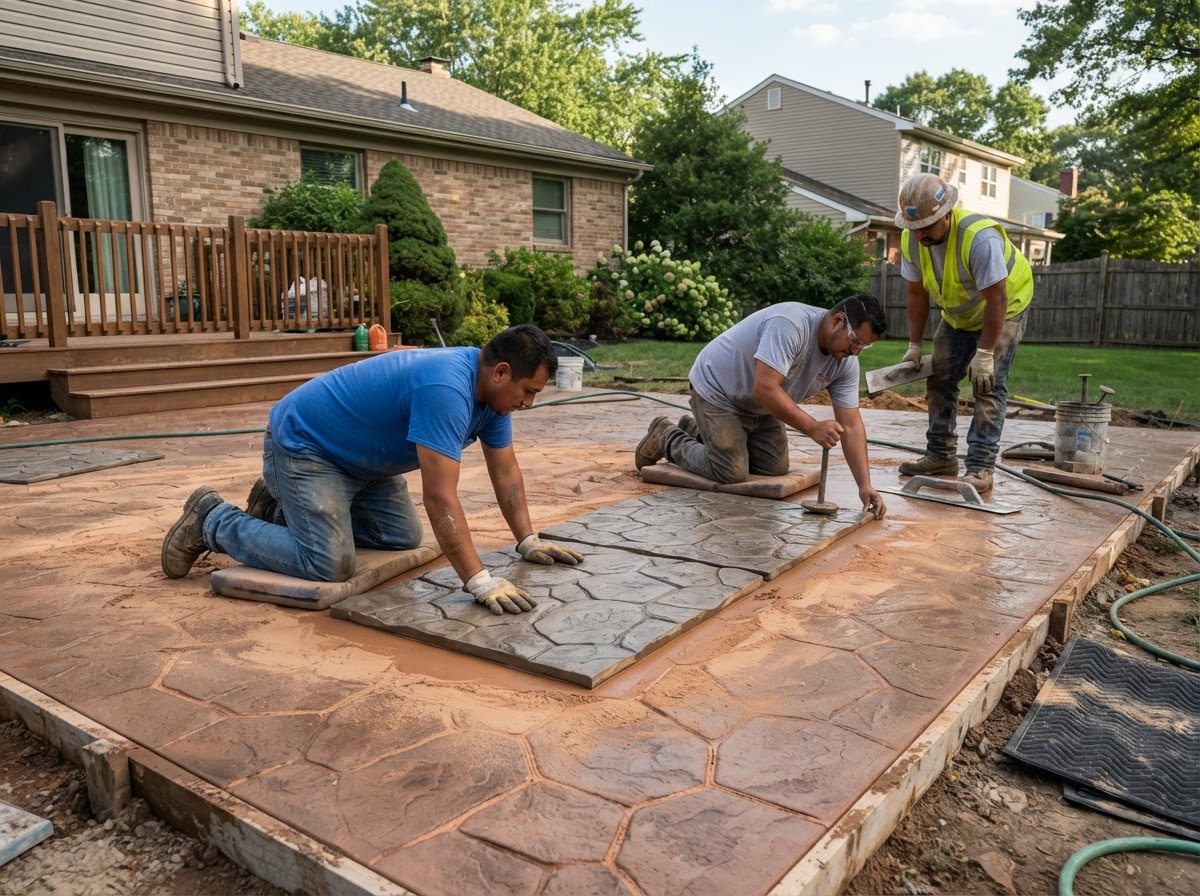
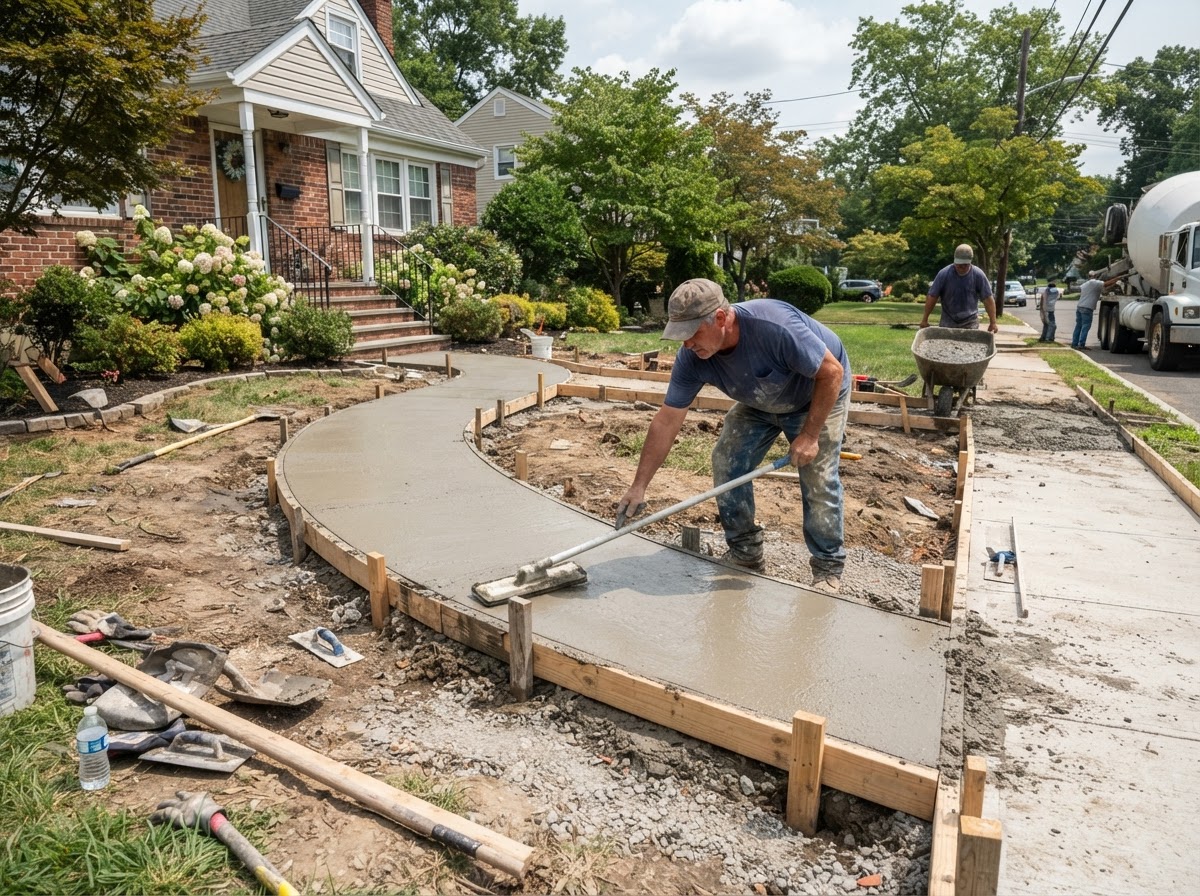
Broom-finished concrete has a textured, non-slip surface created by dragging a broom across it, and is the standard for driveways and walkways. Stamped concrete uses stamp mats to imprint patterns like stone or brick, often with color, for a decorative look. Broom is more economical; stamped is more decorative.
Is stamped concrete suitable for driveways?+
Stamped concrete can be suitable for driveways when properly placed, jointed and sealed, though it is more common on patios and walkways. Pattern depth, joint layout and sealer maintenance affect how it holds up under vehicle traffic. We discuss whether stamping fits your driveway’s use during planning.
What concrete finishes work well around pools?+
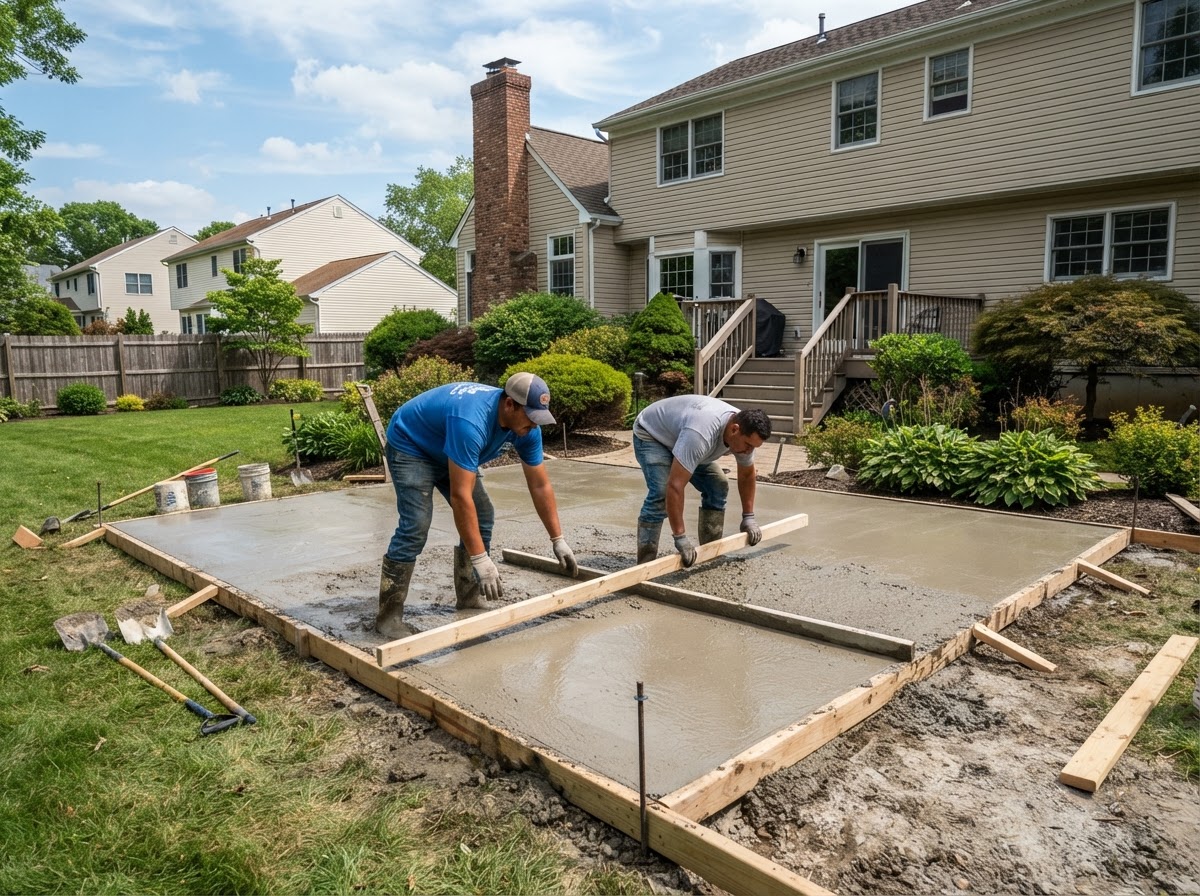
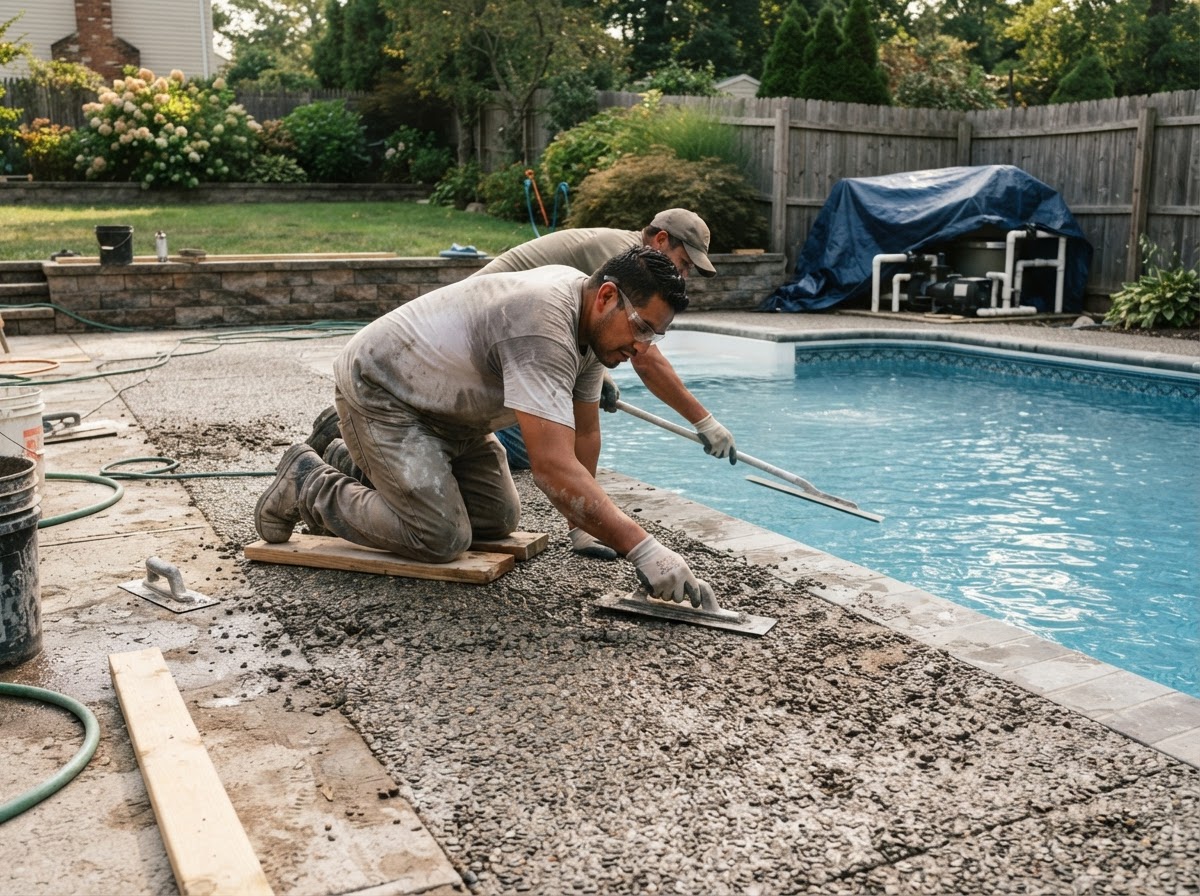
Finishes that provide traction when wet work best around pools, including exposed aggregate, stamped textures and a broom finish. No finish is guaranteed slip-proof, but slip-conscious selection matters. Sealing protects the surface while maintaining the intended texture.
Can you widen an existing concrete driveway?+
An existing concrete driveway can be widened by removing the edge, preparing the base for the extension, and tying the new section in with isolation and control joints. Matching the old-to-new transition keeps the surface working together. Access and property layout determine how much width is practical.
Can damaged concrete be resurfaced?+
Damaged concrete can be resurfaced when the substrate beneath it is fundamentally sound. Resurfacing restores appearance and surface condition but will not fix movement, settlement or a failed base. If the base is compromised, replacement is the more durable solution.
Does concrete sealing help with New Jersey winters and road salt?+
Concrete sealing helps protect against moisture and deicing-salt penetration that drive freeze/thaw scaling. A penetrating or surface sealer slows water and salt entry into the surface. Sealing is especially useful for driveways and walkways exposed to treated roads, and periodic resealing maintains the protection.
What areas around Wall Township does Wall Concrete Driveway serve?+
We serve Wall Township and surrounding communities within an honest 25-mile radius, including Belmar, Spring Lake Heights, Manasquan, Point Pleasant, Brick, Howell, Neptune Township and Tinton Falls. Reach out and we will confirm whether your property is within our service area.